Short answer
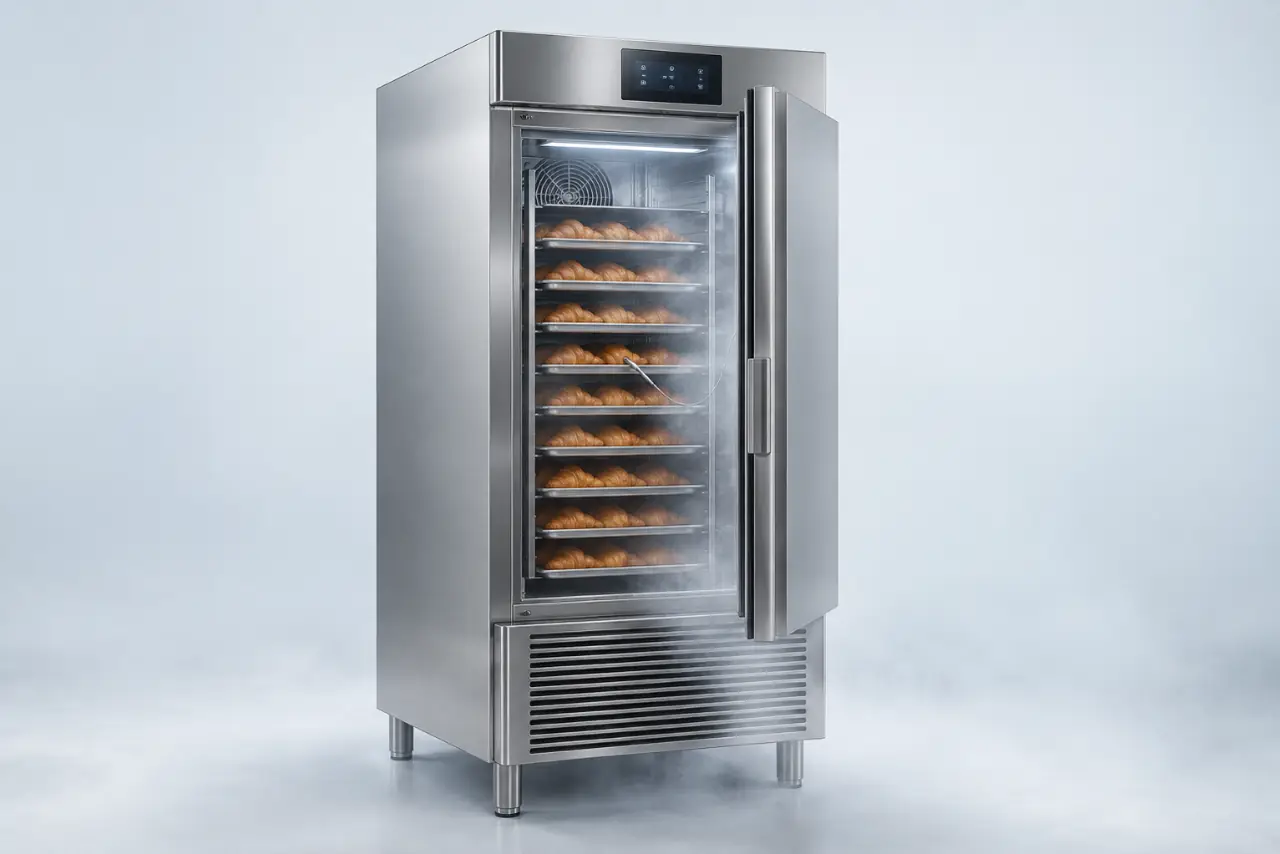
A blast chiller cools cooked food from +70 °C to +3 °C (158 °F to 37 °F) in about 90 minutes using cold, fast-moving air at roughly −10 °C to 0 °C. A shock (blast) freezer continues to −18 °C (0 °F) at the core within about 240 minutes, with air at −35 °C to −40 °C.
Both machines remove heat fast. The difference is where they stop. A blast chiller brings cooked food down to fridge temperature; a shock freezer carries on until the core is frozen. Choosing between them depends on what you produce and how long it must keep.
The two cycles, side by side
| Blast chilling | Shock freezing | |
|---|---|---|
| Core temperature | +70 °C → +3 °C | +70 °C → −18 °C |
| Reference time | ≤ 90 minutes | ≤ 240 minutes |
| Cabinet air | about −10 °C to 0 °C | down to −35 °C / −40 °C |
| Shelf life after cycle | About 3–5 days chilled | Weeks to months frozen |
| Typical users | Restaurants, central kitchens, catering | Bakeries, gelato, seafood, ready meals |
Why speed matters
Bacteria multiply fastest between roughly +5 °C and +60 °C. Cooked food left to cool on a bench, or loaded hot into a normal fridge, spends hours in that range and warms everything around it. A blast chiller moves the core through the danger zone in about an hour and a half, which is why HACCP plans in many countries name it as the control point for cook-chill production.
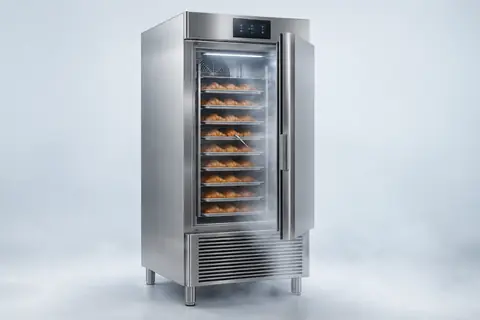
For freezing, speed changes texture. Slow freezing grows large ice crystals that pierce cell walls; when the food thaws it loses water and becomes soft. Shock freezing forms small crystals, so croissant dough, fish fillets and ice cream keep their structure.
How to size the machine
Capacity is quoted as kilograms per cycle, not cabinet volume. Start from your largest daily batch:
- Weigh what you need to cool in one go (for example 30 kg of cooked rice and sauces).
- Check the tray format you already use: GN 1/1 (530 × 325 mm) for kitchens, 600 × 400 mm for bakery.
- Pick a model whose rated blast chill load covers the batch with about 20% margin.
| Trays | Blast chill per cycle | Shock freeze per cycle |
|---|---|---|
| 5 trays | ≈ 18 kg | ≈ 12 kg |
| 10 trays | ≈ 35 kg | ≈ 25 kg |
| 15 trays | ≈ 50 kg | ≈ 38 kg |
| Roll-in trolley (20 × GN 1/1) | ≈ 80 kg | ≈ 60 kg |
Features worth paying for
- Core probe. The cycle ends when the food reaches the target, not when a timer runs out. This is the only way to prove the result for HACCP records.
- Soft and hard chill. Soft chill keeps the air just below 0 °C to protect delicate items; hard chill starts colder for dense products.
- Automatic hold. After the cycle the cabinet switches to storage temperature until someone unloads it.
- Stainless AISI 304 interior with rounded corners for cleaning.
- Power supply. Small reach-ins run on 220–240 V single phase; large and roll-in models need three phase.
Which one should you buy?
Choose a blast chiller if you cook in advance and serve within a few days. Choose a shock freezer, or a combined model, if you bake frozen dough, make gelato, process seafood or sell frozen ready meals. If you are not sure, a combined cabinet gives you both cycles in one footprint.
Further reading
- Spiral Freezer, IQF Tunnel and Nitrogen Freezers: Quick Freezing Explained
- What Is a Flash Freezer? How Flash Freezing Food Preserves Quality
- How Does a Blast Chiller Work? Cycles, Core Probes, Capacity and Cost
- Temperature Probe Guide: Food Core Probes, Thermistors and Calibration