
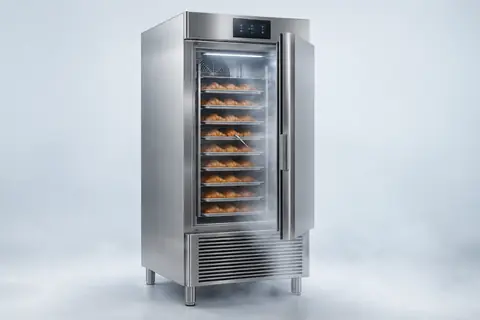
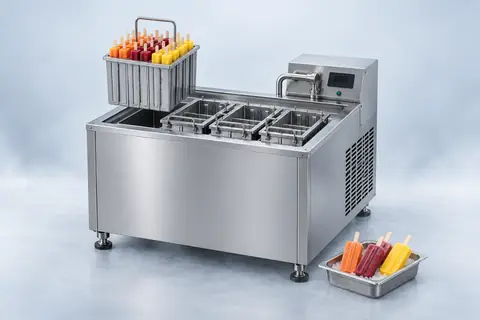
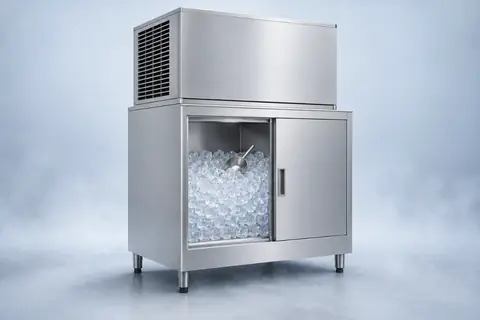
Reach-in · roll-in · GN 1/1 & 600 × 400
Blast Chillers & Blast Freezers
A blast chiller brings cooked food from +70 °C to +3 °C (158 °F to 37 °F) in about 90 minutes; a blast or shock freezer continues to −18 °C (0 °F) at the core within about 240 minutes. Be There supplies reach-in and roll-in models from 5 to 20 trays.
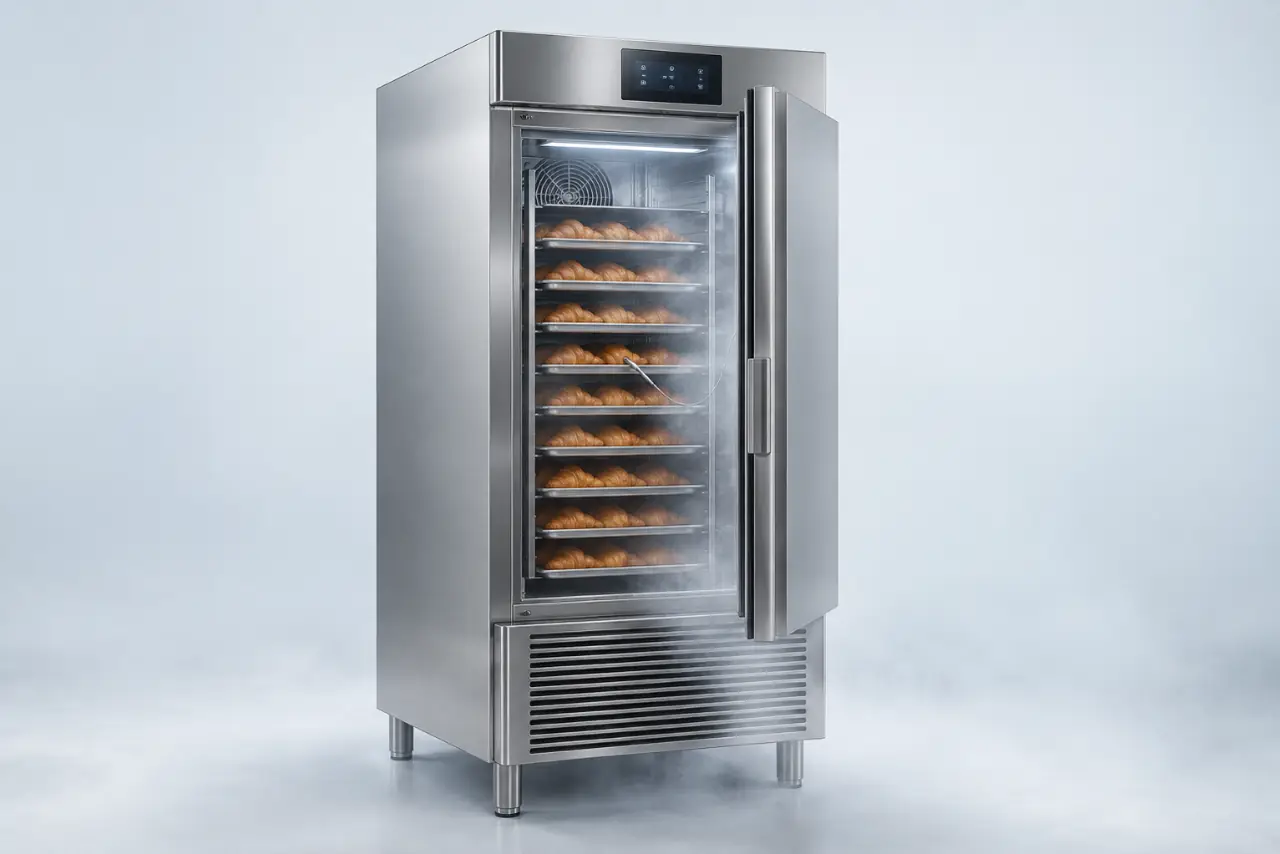 −40 to +3 °C
Specifications
Typical models.
Blast chillers and shock freezers that take cooked food, pastry, ice cream and seafood through the danger zone fast, so texture and food safety hold up. Values are typical; we configure voltage, size or capacity and confirm data on the quotation.
| Model | Trays | Blast chill +70 → +3 °C | Shock freeze +70 → −18 °C | Cabinet temperature | Tray size |
|---|---|---|---|---|---|
| BT-BF5 | 5 | ≈ 18 kg / 90 min | ≈ 12 kg / 240 min | to −40 °C | GN 1/1 or 600 × 400 |
| BT-BF10 | 10 | ≈ 35 kg / 90 min | ≈ 25 kg / 240 min | to −40 °C | GN 1/1 or 600 × 400 |
| BT-BF15 | 15 | ≈ 50 kg / 90 min | ≈ 38 kg / 240 min | to −40 °C | GN 1/1 or 600 × 400 |
| BT-BF20R | Roll-in trolley | ≈ 80 kg / 90 min | ≈ 60 kg / 240 min | to −40 °C | Trolley 20 × GN 1/1 |
≈ approximate, measured at standard test conditions.
Features
Built for daily commercial use.
Core-probe control
Cycles end on the food's core temperature, not on a timer guess.
Soft & hard chill
Separate programmes for delicate pastry and dense meat.
Stainless steel AISI 304
Rounded inner corners for fast cleaning in HACCP kitchens.
Hold mode
Automatically switches to storage after the cycle ends.
Applications
Where it works.
- Central kitchens
- Bakeries and pastry
- Ice cream & gelato
- Catering & airline
- Seafood processing
- Hotel kitchens
What is the difference between blast chilling and shock freezing?
Which tray size should I choose?
What power supply do they need?
How cold does a blast chiller get?
Is a flash freezer the same as a blast freezer?
Buyer's guides
Before you order.
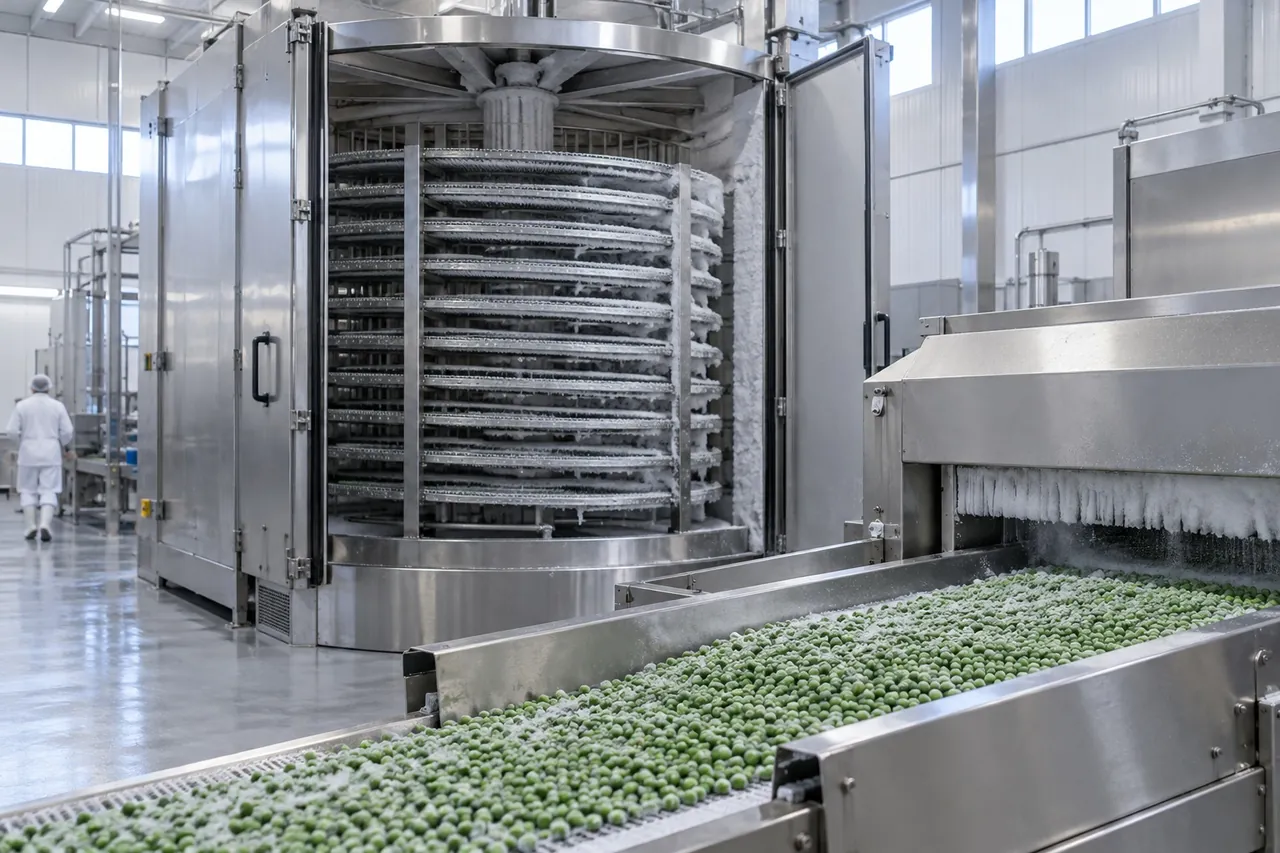
Technical10 min read
Spiral Freezer, IQF Tunnel and Nitrogen Freezers: Quick Freezing Explained
Continuous quick freezing lines explained in plain numbers: how spiral, tunnel, fluidised-bed and cryogenic freezers work, what they cost to run and when a batch blast freezer is enough.
Read the guide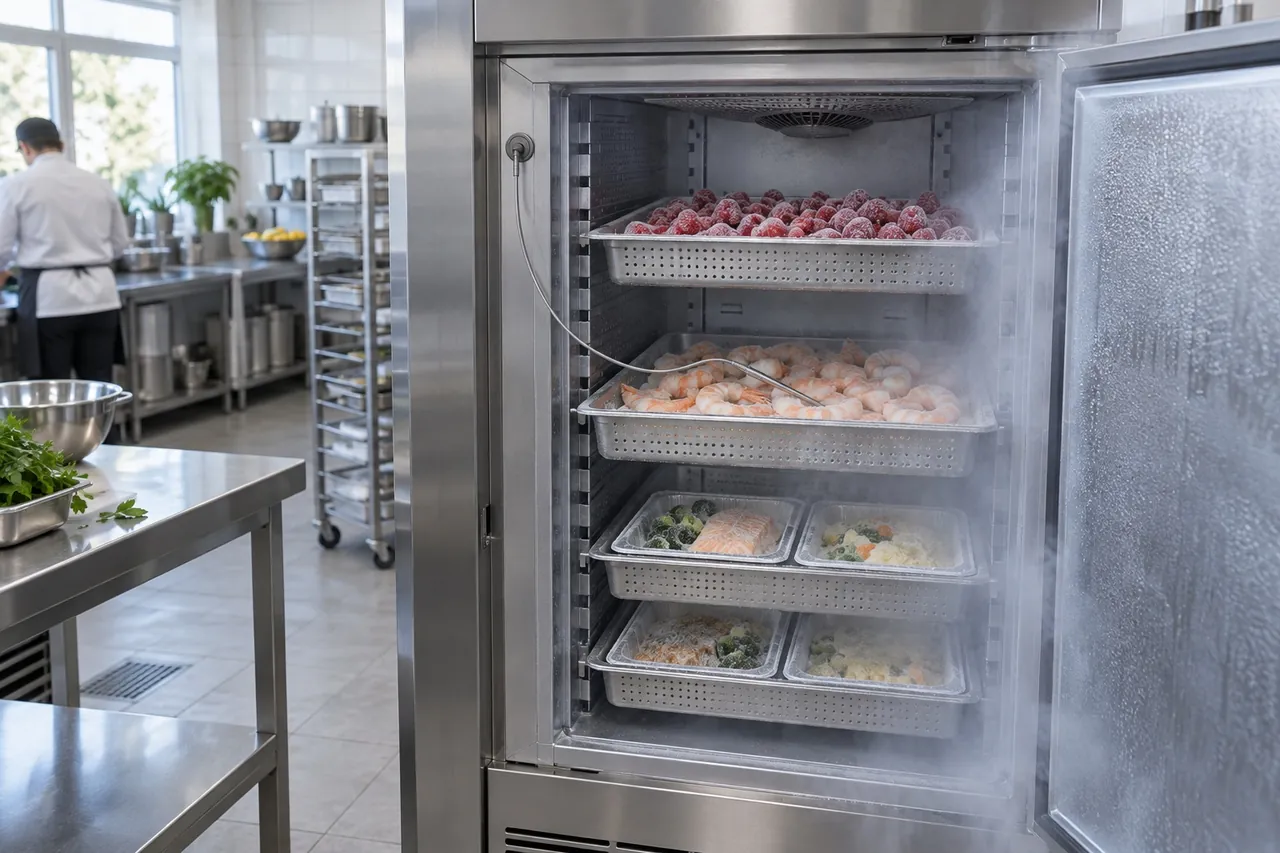
Technical10 min read
What Is a Flash Freezer? How Flash Freezing Food Preserves Quality
Flash freezing is about speed. Here is what a flash freezer does differently from a normal freezer, what to freeze in one, and how to size it.
Read the guide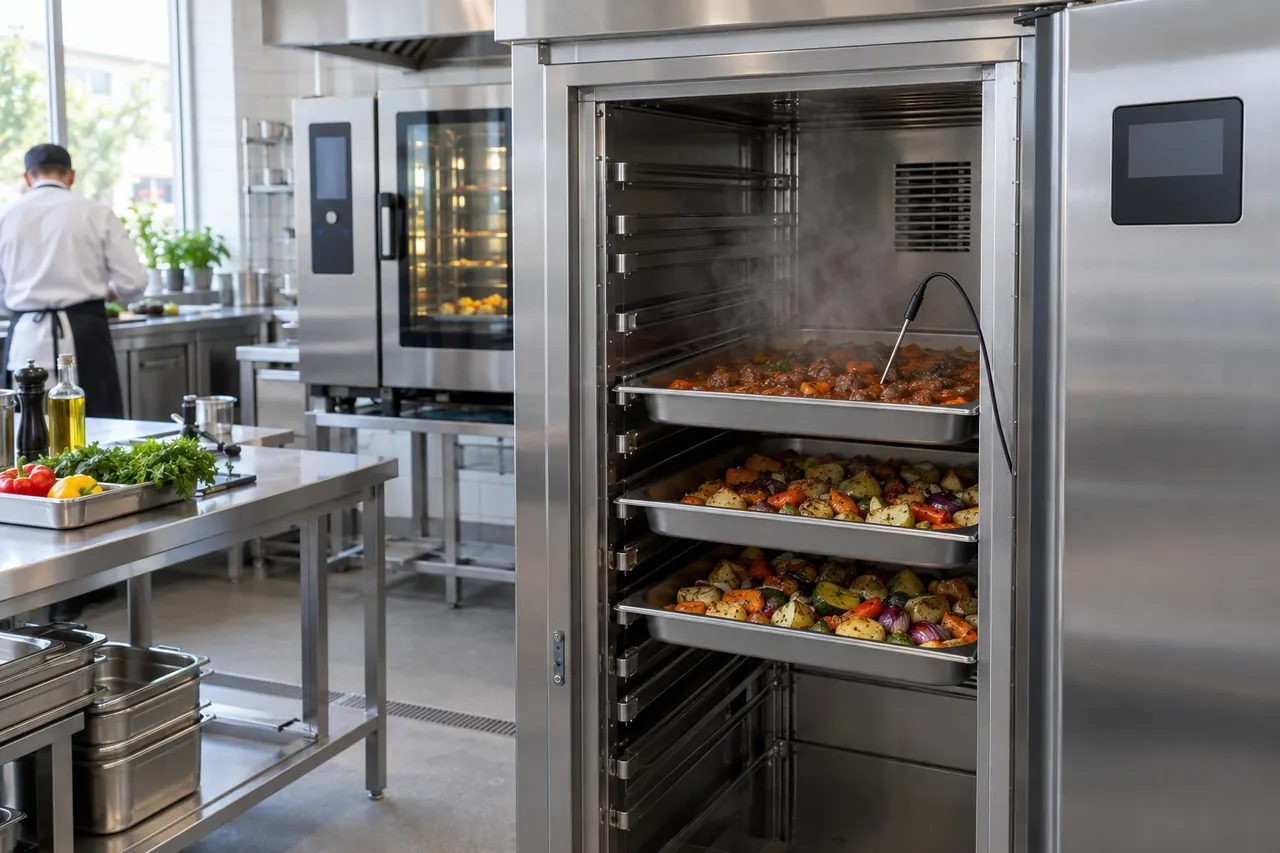
Technical11 min read
How Does a Blast Chiller Work? Cycles, Core Probes, Capacity and Cost
Inside a commercial blast chiller: the refrigeration, the airflow, the soft and hard chill cycles, the core probe, and how much food each size really handles.
Read the guide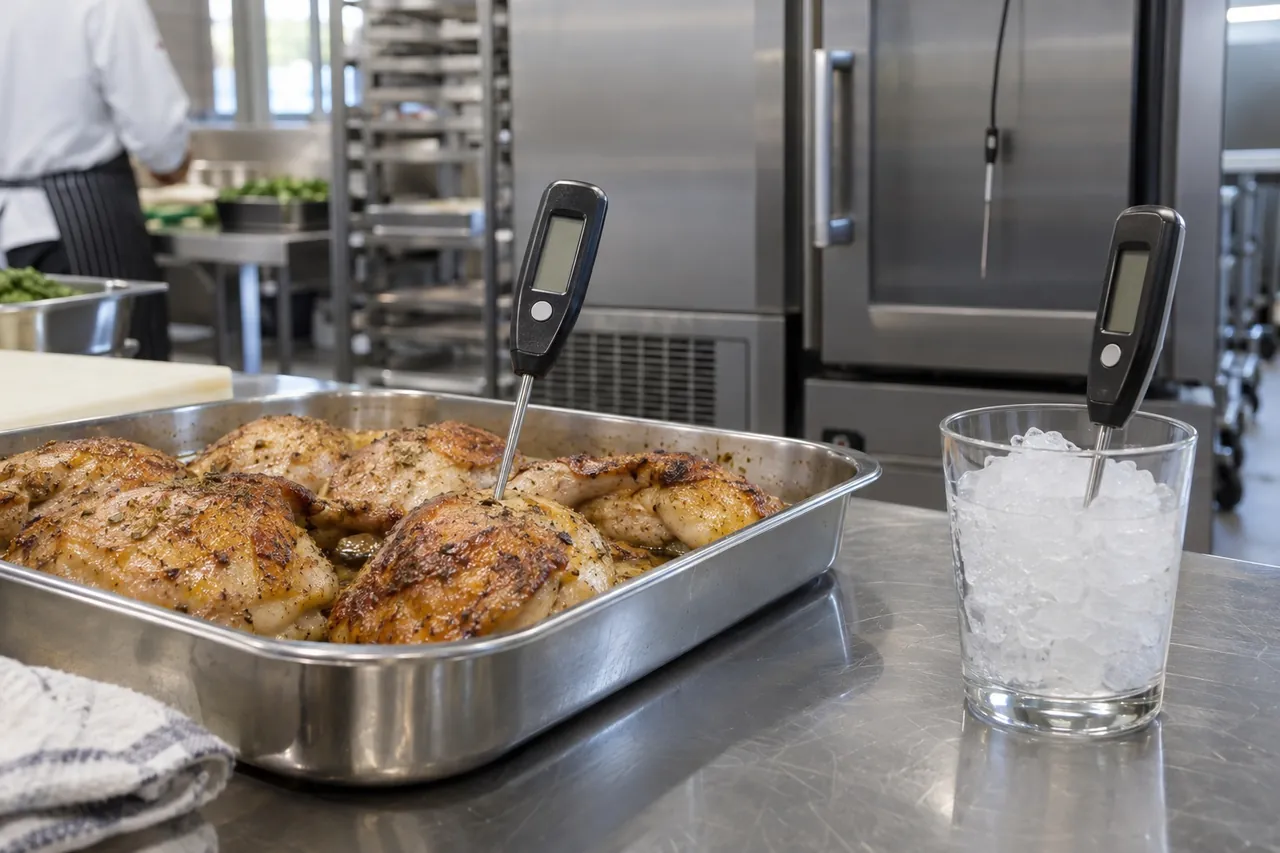
Food safety10 min read
Temperature Probe Guide: Food Core Probes, Thermistors and Calibration
Which temperature probe to use for cooking, cooling, hot holding and cold storage, how accurate it must be, and how to calibrate it in ten minutes.
Read the guideTechnical3 min read
Blast Chiller vs Shock Freezer: What’s the Difference and Which Do You Need?
Cycle times, core temperatures and capacity explained, so you can choose the right machine for a kitchen, bakery or seafood line.
Read the guideFood safety3 min read
The 2-Stage Cooling Method: How to Cool Food Safely (FDA Food Code)
135 °F to 70 °F in 2 hours, then to 41 °F within 6 hours in total. What the rule means in a real kitchen, and how a blast chiller makes it routine.
Read the guideRelated
Other lines in the chain.
Request a quote