Short answer
Size an ice merchandiser at about 1.4 ten-pound bags per cubic foot, hold it at −12 °C to −6 °C (10–21 °F), choose auto-defrost for retail, and for outdoor sites check the ambient rating, shade, lockable doors and UL/ETL or CE certification.
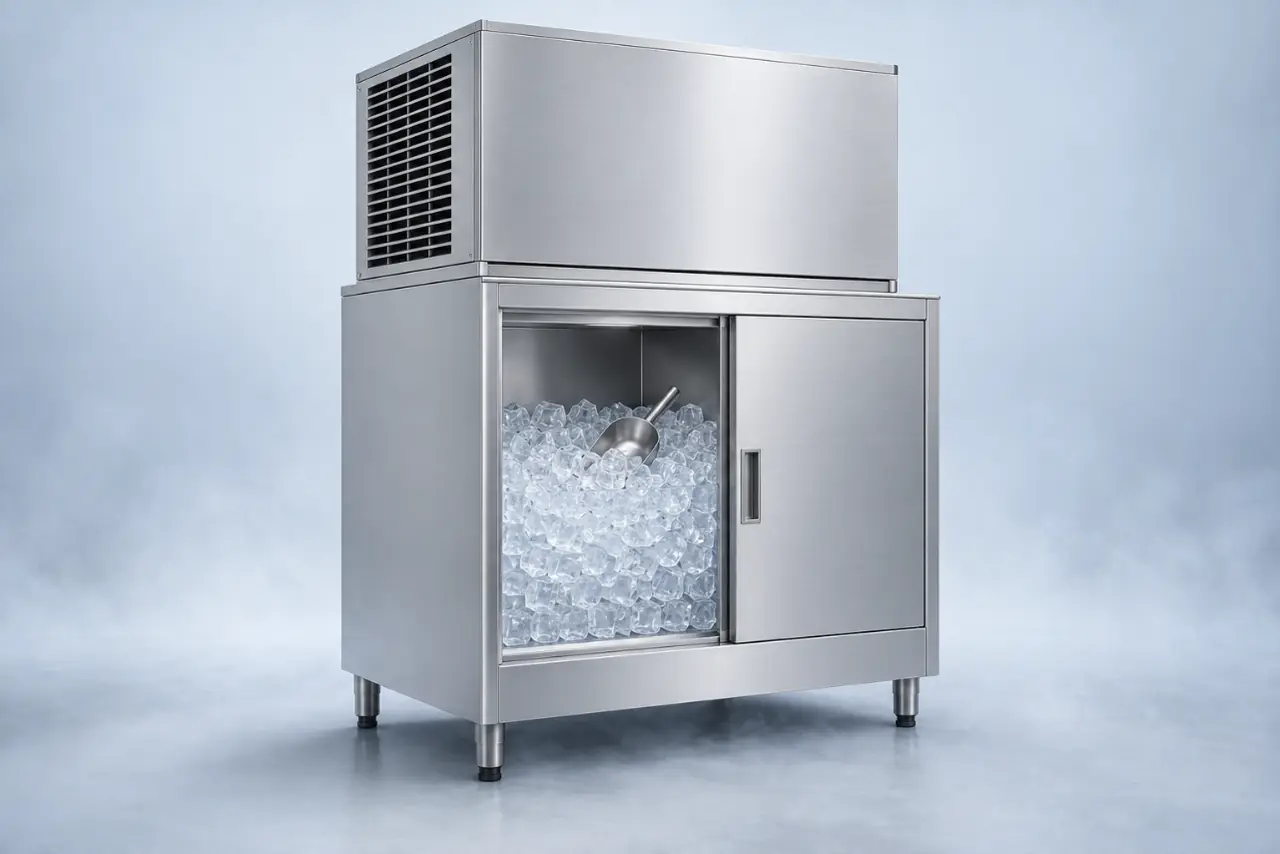
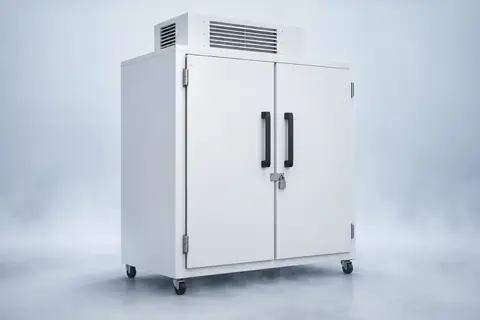
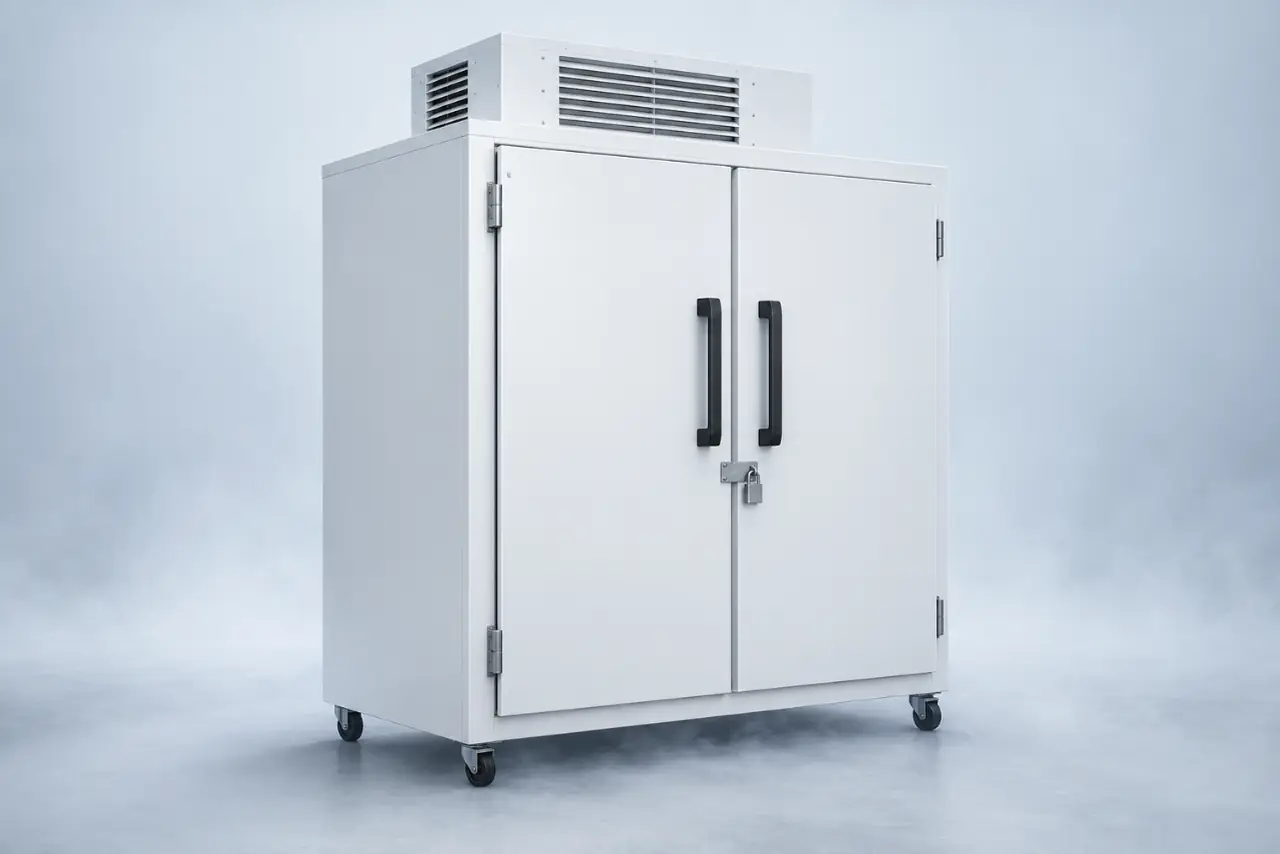
An ice merchandiser is a solid-door freezer built for one job: keeping bagged ice frozen, loose and ready to sell. It looks simple, but capacity, defrost type and outdoor durability decide whether customers get a clean bag or a frozen block.
Capacity: volume to bags
Bagged ice is usually sold in 7 lb (about 3 kg) and 10 lb (about 4.5 kg) bags. As a working figure, one cubic foot holds about 1.4 bags of 10 lb ice.
| Net volume | 10 lb bags (approx.) | Typical site |
|---|---|---|
| 21 cu ft / 600 L | 30 | Convenience store, marina kiosk |
| 39 cu ft / 1,100 L | 55 | Petrol station, small supermarket |
| 55 cu ft / 1,560 L | 80 | Busy forecourt, campground |
| 70 cu ft / 2,000 L | 100 | Supermarket, ice distributor depot |
Size for your delivery interval: if the ice company restocks twice a week, the cabinet must hold half a week of sales on a hot weekend.
Holding temperature
Bags should sit around −12 °C to −6 °C. Much warmer and the surface melts and refreezes, welding bags together. Much colder only costs electricity. A digital controller with a visible display makes checks easy for staff.
Auto-defrost or cold-wall?
Auto-defrost
A fan-coil evaporator cools the air and defrosts itself on a timer. Frost does not build up on the walls, bags stay loose and staff never need to empty the cabinet to defrost it. This is the common choice for retail.
Cold-wall
Refrigerant tubes run inside the cabinet walls. There are fewer moving parts and the cabinet stays very cold, but frost builds up on the walls and it must be emptied and defrosted manually from time to time.
Outdoor installation checklist
- Galvanised, powder-coated steel cabinet and a weather-protected condensing unit.
- Rated for the hottest day on site. Many forecourts in the Middle East and southern US see 43 °C or more.
- Shade the condenser and keep 30 cm clear on the air inlet and outlet.
- Lockable hasp and heavy-duty hinges for unattended hours.
- Electrical certification for your market, for example UL/ETL in North America or CE in Europe. Ask for the documents before ordering.
Graphics and branding
The doors are a billboard. Most buyers order “ICE” graphics or their own brand printed as vinyl decals. Send vector artwork with the order so decals are applied at the factory.
What to send for a quotation
- Bags per week and bag size.
- Indoor or outdoor, and the hottest ambient temperature.
- Voltage and plug type.
- Graphics artwork, if any.
Further reading
- Lockable Freezer Guide: Commercial Freezers and Fridges With a Lock
- Outdoor Refrigerators and Freezers: Ambient Ratings and Weatherproofing