Flake Ice Machine Guide: Capacity, Seawater Models and Uses
How flake ice is made, how much a fish market or processing plant needs, freshwater vs seawater machines and storage.
Be There Engineering TeamPublished 3 min read
Short answer
A flake ice machine freezes water on a refrigerated drum and scrapes it into dry flakes 1.5–2.2 mm thick at about −5 °C to −8 °C. Capacities range from about 300 kg to 20 t or more per day. Seawater models with corrosion-resistant evaporators serve boats and ports.
How flake ice is made
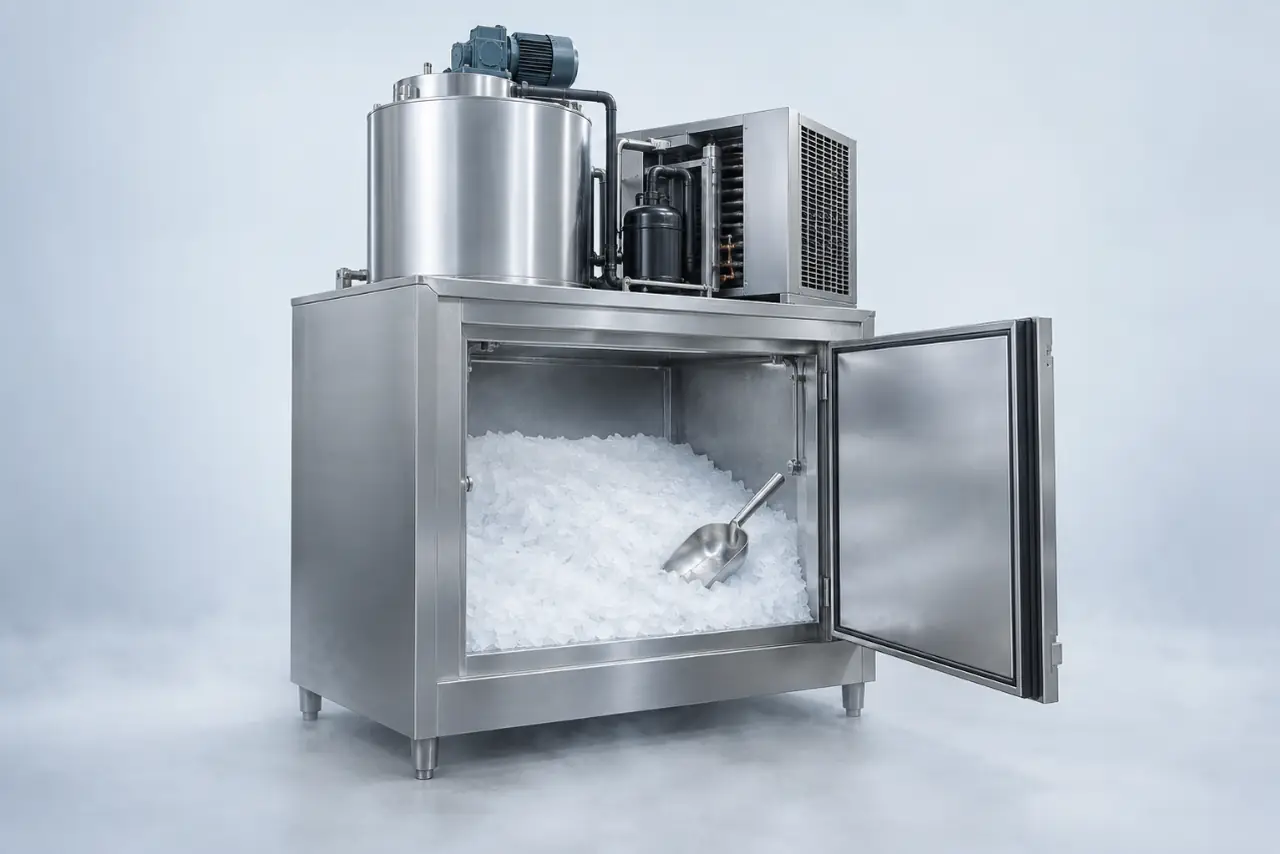
Water is sprayed onto a drum cooled by refrigerant. It freezes into a thin sheet within seconds, and a rotating scraper breaks it into flakes that drop into the bin below. Because flakes leave the drum below 0 °C, they stay dry and loose instead of fusing into a block.
How much capacity?
Application
Rule of thumb
Typical machine
Supermarket seafood counter
About 10 kg per metre of display per day
300–500 kg/day
Fish market or processing
About 0.5–1 kg ice per kg of fish (more in hot climates)
1–10 t/day
Fishing boat
Depends on catch and trip length
1–5 t/day, seawater
Concrete cooling
Calculated from mix temperature target
10–30 t/day
Freshwater or seawater?
Seawater flake ice machines freeze salt water directly, which is convenient at sea and in ports. They need corrosion-resistant evaporators and fittings and usually a slightly lower evaporating temperature. Freshwater machines are standard for supermarkets, processing plants and concrete.
Cooling options
Small machines are air-cooled. Larger machines use water-cooled or evaporative condensers, or can be connected to a central refrigeration system.
Storage and handling
Store flake ice in an insulated bin or ice room held below 0 °C. Large plants add rakes and screw conveyors to move ice automatically to packing or processing lines.
A common starting point is about 1 kg of ice per 1 kg of fish per day in warm climates, plus display ice changed daily.
Why is flake ice better for fish?
Flakes are dry, sub-cooled and soft-edged, so they pack around fish, cool it fast and do not bruise it.
Does a flake ice machine need a storage room?
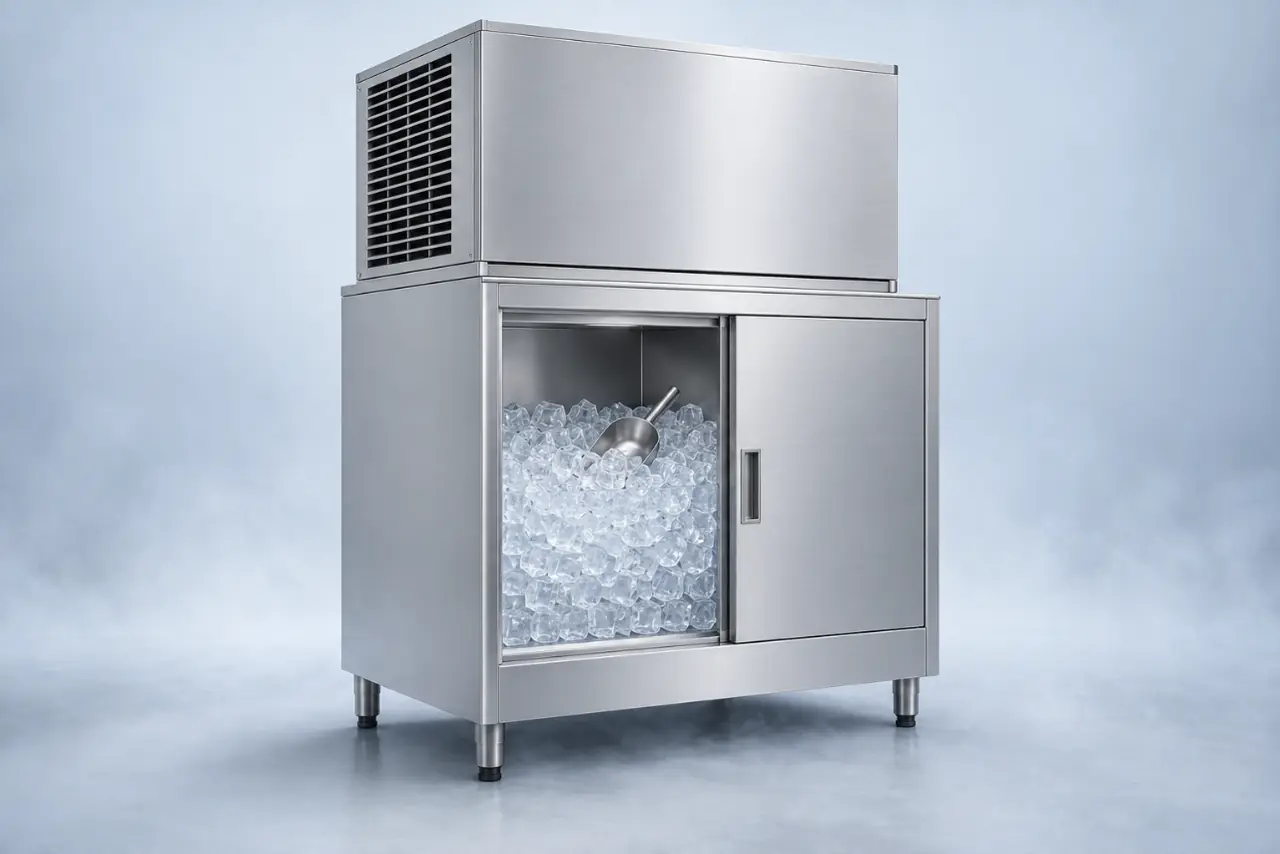
Small machines sit on insulated bins. Large plants use an insulated ice storage room, often with a rake or screw conveyor.
Can flake ice be used for concrete cooling?
Yes. Flake ice replaces part of the mixing water to keep large concrete pours cool and reduce cracking.
What is the difference between a flake ice machine and a snow flake ice machine?
A flake ice machine freezes plain water or seawater into hard, dry flakes 1.5–2.2 mm thick for cooling fish, produce and concrete. A snow flake ice machine, or bingsu machine, freezes milk, juice, tea or syrup on a cold drum and shaves it into fluffy, edible ribbons for desserts. Be There supplies both, at 300 kg–20 t and 120–240 kg per day.
How much does a flake ice machine cost?
Flake ice machine prices vary with daily capacity, freshwater or seawater evaporator, condenser type, storage bin and voltage. As a rough guide, small commercial units of about 300–500 kg per day typically cost a few thousand US dollars, while industrial 10–20 t machines cost several tens of thousands. Be There quotes each configuration FOB, CIF or DDP.
How does a flake ice generator work?
Water is sprayed or flows onto the inside of a refrigerated stainless steel drum, the evaporator, where it freezes into a thin sheet. A slowly rotating scraper or auger cuts the sheet into dry flakes about 1.5–2.2 mm thick at about −5 °C to −8 °C (23–18 °F), which drop straight into a bin or ice storage room below.
Is there a flake ice machine for home use?
Home or countertop flake ice makers are rare; most small machines that call their ice "flake" actually make soft nugget-style ice. Genuine drum-type flake ice machines start at about 300 kg (660 lb) per day and need a drain and dedicated power, so they suit businesses. For small volumes, a compact nugget or cube machine is usually the better choice.
What is flake ice used for?
Flake ice is used to chill fresh fish and seafood, cover supermarket fish and produce displays, cool dough mixing in bakeries, keep poultry and meat cold during processing, cool concrete batching water, and in laboratories and hospitals. Its flat, dry flakes pack closely around product without sharp edges, giving fast, even cooling and little bruising.
What is an industrial flake ice machine?
An industrial flake ice machine produces from about 5 t to 20 t or more of flake ice per day, usually with a split or remote condensing unit, three-phase power and an insulated ice storage room or silo. Fisheries, ports, processing plants and concrete batching sites use them. Seawater versions use corrosion-resistant evaporators for boats and coastal plants.