

Short answer
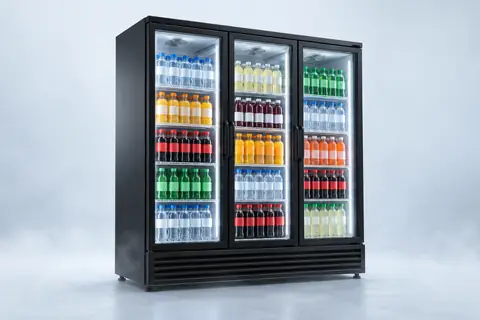
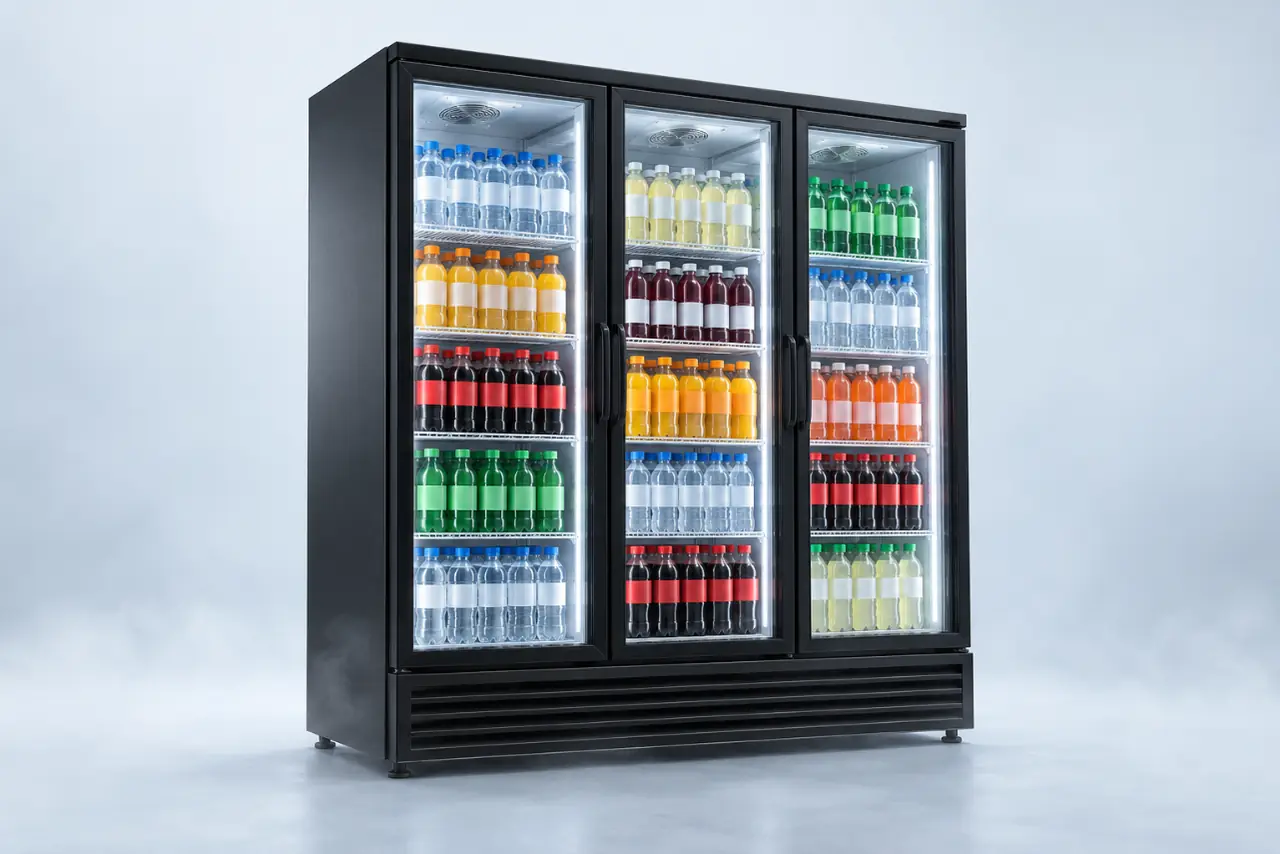
A 1-door glass display fridge is about 0.6–0.7 m wide, 2-door about 1.0–1.2 m, 3-door about 1.6–1.9 m and 4-door about 2.0–2.5 m, all roughly 2 m high. Choose fan-forced cooling, LED lighting, low-E or heated glass, an R290 refrigerant option and the certification your market needs, such as NSF and UL/ETL in the US or CE in Europe.
Typical dimensions
| Doors | Width | Depth | Height | Net volume |
|---|---|---|---|---|
| 1 | 0.6–0.7 m (24–28 in) | 0.6–0.75 m | ≈ 2.0 m (79 in) | ≈ 350–450 L |
| 2 | 1.0–1.2 m (39–47 in) | 0.65–0.8 m | ≈ 2.0 m | ≈ 700–900 L |
| 3 | 1.6–1.9 m (63–75 in) | 0.7–0.8 m | ≈ 2.0 m | ≈ 1,100–1,400 L |
| 4 | 2.0–2.5 m (79–98 in) | 0.7–0.8 m | ≈ 2.0 m | ≈ 1,500–1,800 L |
Check the door opening and route into the store before ordering; many cabinets need about 0.8 m of clear width to pass through a doorway.
Features that matter
- Fan-forced cooling for even temperature from top to bottom shelf.
- LED lighting on the door frames lights product, not shoppers, and adds almost no heat.
- Low-E or heated glass to stop fog in humid stores.
- Self-closing doors with hold-open stops for restocking.
- Digital controller with display and alarm.
- Refrigerant: R290 for most new markets; see our R290 vs R404A guide.
Placement and running cost
Leave the gap at the top and back that the spec sheet asks for, keep cabinets away from ovens and direct sun, and avoid blocking the grille. A cabinet that cannot breathe runs longer and fails sooner.
Certification by market
| Market | Usually required |
|---|---|
| United States, Canada | UL or ETL electrical listing; NSF/ANSI for foodservice; DOE energy rules for some categories |
| European Union, UK | CE / UKCA, F-gas compliant refrigerant, energy label for some categories |
| Gulf states | Country conformity schemes such as SASO (Saudi Arabia) |
Ask for the certificate for the exact model before you order. See our glass door display fridges.
Further reading
- Back Bar Cooler Guide: Bar Fridge Sizes, Glass Doors and Placement
- Commercial Beverage Cooler Guide: Glass Door Drink Fridges for Shops
- Refrigerated Display Case Guide: Bakery, Deli, Meat and Cake Showcases
- Countertop Display Fridge Guide: Glass Door Mini Fridges for Retail
- Prep Table Refrigerator Guide: Sandwich, Salad and Pizza Prep Fridges
- Open Air Cooler Guide: Multideck Merchandisers and Grab-and-Go Fridges