PIR vs PU vs XPS vs EPS Insulation: R-Values Compared
R-value per inch, moisture, strength and fire behaviour of the four common rigid foam boards, with a chart for cold rooms and buildings.
Be There Engineering TeamPublished 3 min read
Short answer
Per inch, PIR/polyiso gives about R-6 to R-6.5, PU about R-6, XPS about R-5 and EPS about R-3.6 to R-4.2. PIR has the best fire behaviour of the foams, XPS the best moisture and load resistance for floors and foundations, and EPS the lowest cost per board.
R-value chart
Material
λ, W/(m·K)
R per inch (US)
RSI per 25 mm
Water uptake
Compressive strength
PIR / polyiso
0.020–0.024
≈ 6.0–6.5
≈ 1.05–1.25
Low (faced)
≈ 120–200 kPa
PU (polyurethane)
0.022–0.024
≈ 6.0
≈ 1.05–1.15
Low
≈ 120–200 kPa
XPS
0.028–0.030
≈ 5.0
≈ 0.85–0.9
Very low (≤ 1% vol)
150–700 kPa
EPS
0.033–0.038
≈ 3.6–4.2
≈ 0.65–0.75
Moderate
70–250 kPa
Mineral wool
0.034–0.040
≈ 3.6–4.2
≈ 0.65–0.75
Must stay dry
Low (boards ≈ 40–80 kPa)
Values are typical for new boards at standard mean temperature. Long-term R-values of gas-blown foams are slightly lower; compare products using their declared long-term values.
PIR and PU
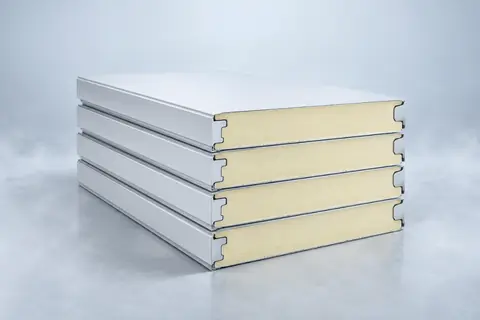
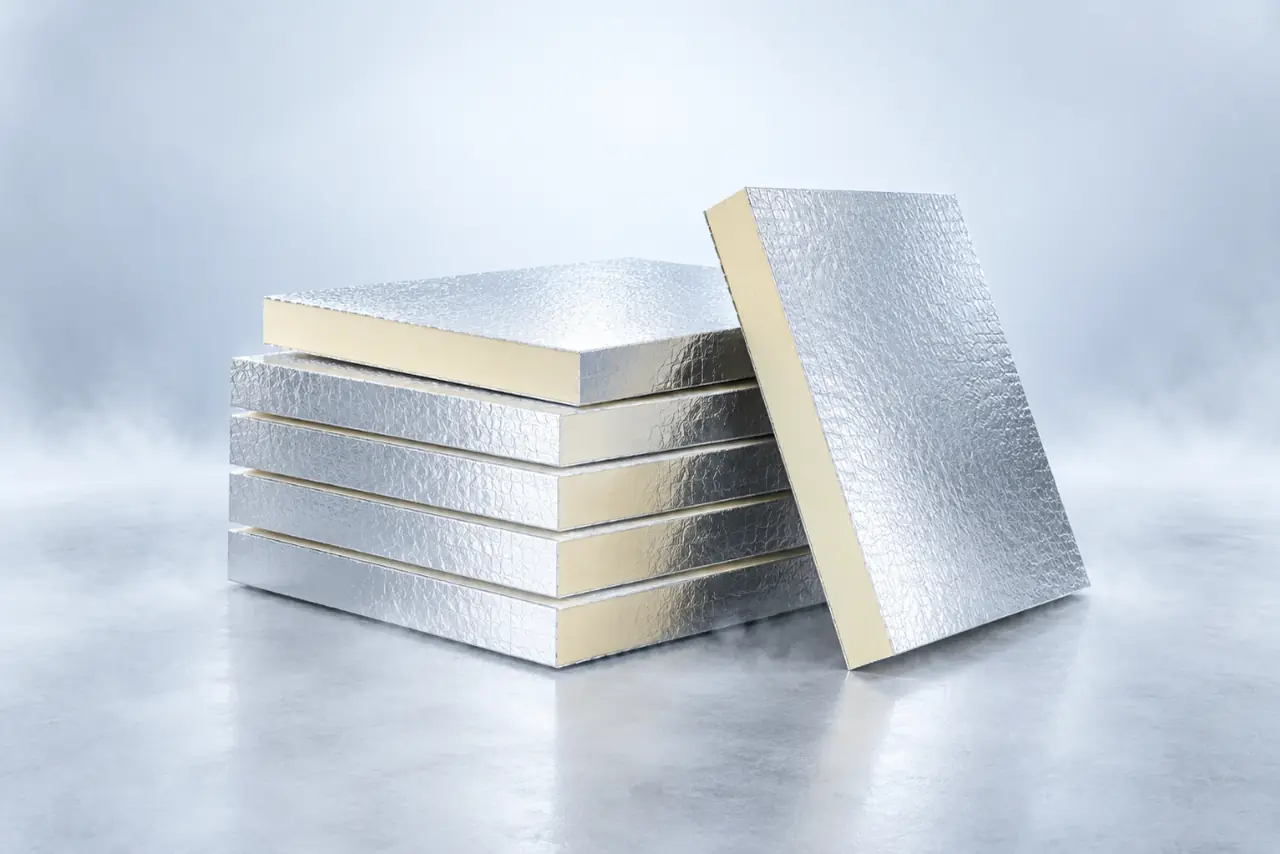
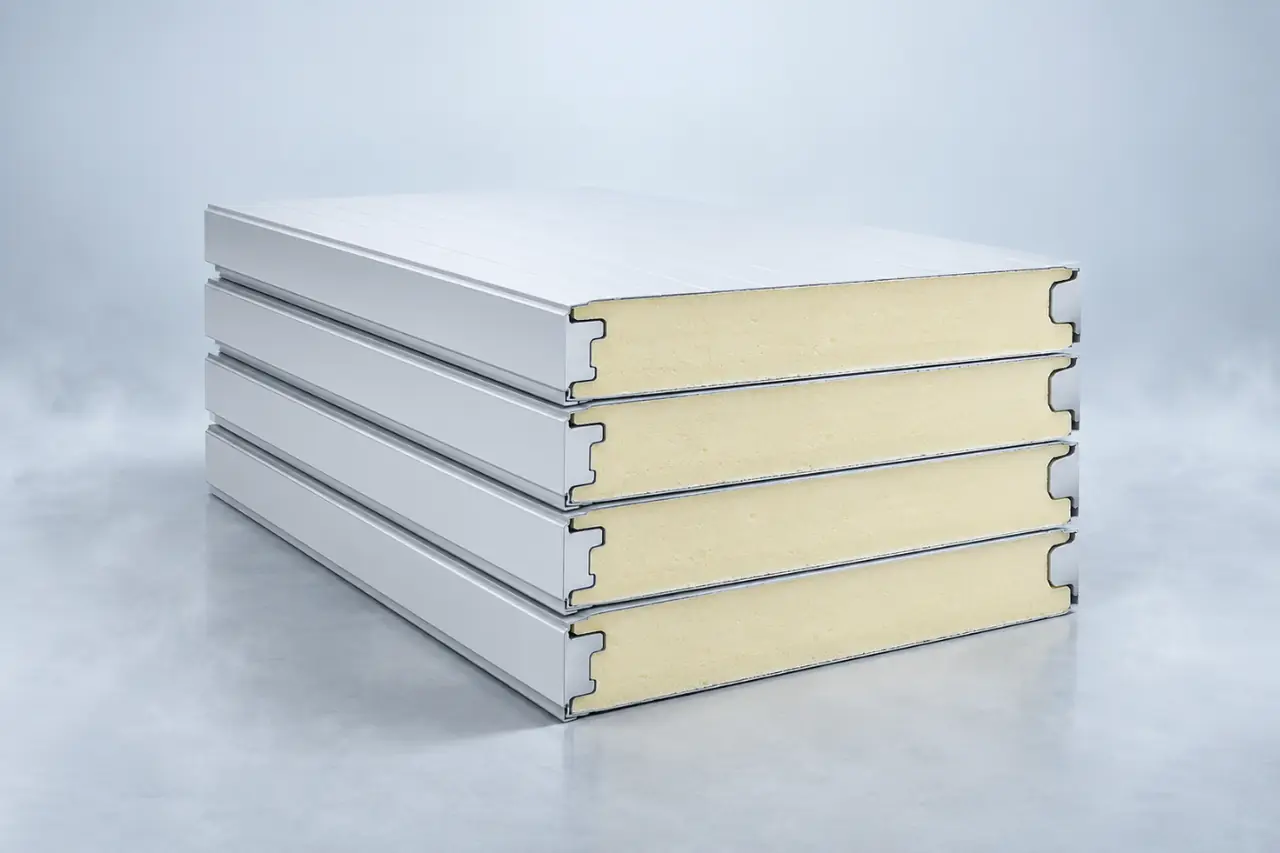
Both are thermoset foams with closed cells and the lowest conductivity of common boards. PIR uses more isocyanate, forming a more fire-resistant structure that chars rather than melts. That is why PIR is preferred for cold room panels, roofs and HVAC duct board where fire rules apply.
XPS
Extruded polystyrene is made as a continuous closed-cell board. It keeps its insulation value in wet conditions and comes in grades from 150 to 700 kPa, so it is used under freezer floors, foundations and inverted roofs.
EPS
Expanded polystyrene is moulded from beads. It is the cheapest per board, light and easy to cut, but needs more thickness for the same R-value and absorbs more moisture than XPS.
Which one where?
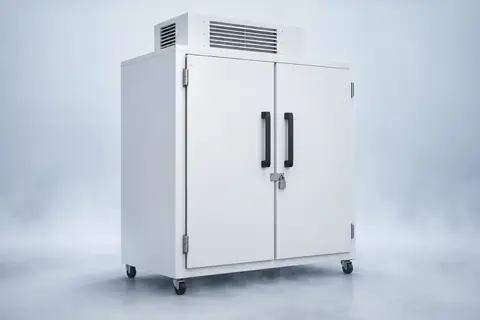
Cold room and freezer walls: PU or PIR sandwich panels.
Freezer floors and foundations: XPS.
Roofs and ducts with fire requirements: PIR, foil-faced.
PIR (polyiso) and PU, at about R-6 to R-6.5 per inch at standard mean temperature.
Is XPS better than EPS?
XPS absorbs less water and carries more load at the same thickness, so it is preferred under slabs and below grade. EPS is cheaper and fine where it stays dry.
What is the R-value of 2-inch foam board?
About R-12 to R-13 for PIR, R-10 for XPS and R-7 to R-8 for EPS.
How do I convert λ to R-value per inch?
R per inch (US units) ≈ 0.144 ÷ λ, where λ is in W/(m·K). For λ = 0.022, R ≈ 6.5 per inch.
Is polyiso better than XPS?
Polyiso (PIR) has a higher R-value, about R-6 to R-6.5 per inch versus about R-5 for XPS, and better fire behaviour, so it is preferred for walls, roofs and cold room panels. XPS resists water absorption and compression better, so it is the better choice below grade, under slabs and under freezer floors where boards carry load and stay damp.
What is the difference between EPS and XPS foam board?
EPS (expanded polystyrene) is made of fused beads and gives about R-3.6 to R-4.2 per inch at low cost. XPS (extruded polystyrene) is extruded into a closed-cell board giving about R-5 per inch, compressive strength of about 150–700 kPa and water absorption under 1% by volume. XPS costs more but performs better under load and in wet conditions.
Which is better for a freezer floor, EPS or XPS?
XPS is usually preferred under freezer floors. It keeps a stable R-value of about R-5 per inch in damp conditions, absorbs under 1% water by volume and offers compressive strengths of about 150–700 kPa for forklift and racking loads. Typical freezer floors use 100–150 mm (4–6 in) XPS over a vapour barrier with underfloor heating or ventilation.
Does XPS lose R-value over time?
XPS can lose a small part of its initial R-value over years as blowing agent diffuses out, which is why long-term aged values are quoted. It still keeps its value well when damp, unlike EPS, which can absorb more water over time. PIR also ages slightly, so compare long-term thermal resistance, not just the fresh-board value, when choosing.